Nó được làm bằng PLA Bio-Base, có thể phân hủy hoàn toàn Tính năng: 1. Sản phẩm phân bón công nghiệp ...
Đọc thêm
Direct Answer: Choose Low Melting Yarn when you need a reliable, heat-activated bonding solution in textile manufacturing -- specifically when your process requires fiber-to-fiber adhesion without adhesives, when shape retention is critical, or when your end product demands lightweight structural integrity. It is the go-to choice for applications in nonwovens, shoe uppers, filtration fabrics, automotive textiles, and sportswear.
Low melting yarn (also called LMY or thermal bonding yarn) is a specialty fiber engineered to melt or soften at a lower temperature than standard yarns -- typically between 85 degrees C and 180 degrees C -- while the surrounding fibers remain intact. When heat is applied, this yarn flows and bonds with adjacent fibers, creating a unified structure without additional adhesives or binders.
It is available in both 100% low-melt fiber constructions and sheath-core formats, where only the outer sheath melts while the inner core preserves tensile strength.
If your production process avoids chemical glues or liquid adhesives due to regulatory, health, or performance concerns, low melting yarn provides a clean, dry-bond alternative. Heat activation replaces chemical bonding entirely.
For structured items like shoe uppers, hat brims, or padded garments, low melting yarn locks fabric geometry in place after heat-setting, preventing deformation during use or washing.
Nonwoven production lines frequently integrate low melting yarn as a binder fiber to improve web cohesion, tensile strength, and dimensional stability without compromising breathability.
If your production flow already includes a heat tunnel, oven, or steam press (common in shoe manufacturing, automotive interiors, or filtration), low melting yarn bonds during the same step -- reducing process stages and costs.
When fabric weight is a constraint but structural support is needed -- such as in sports apparel or medical textiles -- sheath-core low melting yarn delivers rigidity without adding significant mass.
Low melting yarn is widely used in filtration media where fiber bonding must be precise, uniform, and chemical-free to avoid contaminating the filtered medium (Source: Textile World, Filtration Fiber Market Overview, 2022).
Not all low melting yarns are the same. Your choice depends on your processing temperature window, fiber compatibility, and performance requirements. The table below summarizes common options:
| Type | Melting Point | Base Material | Best For |
|---|---|---|---|
| 100% Nylon LMY 85 deg C | 85 deg C | Nylon | Low-temperature bonding, delicate substrates, elastics |
| 100% Nylon LMY 110 deg C | 110 deg C | Nylon | Moderate heat applications, sock toes, sportswear hems |
| 100% Polyester LMY 110 deg C | 110 deg C | Polyester | Nonwovens, filtration, cost-sensitive industrial uses |
| Sheath-Core Polyester LMY 110 deg C | 110 deg C (sheath only) | Polyester | Structural fabrics needing strength + bonding |
| Polyester LMY for Shoe Uppers | 110-130 deg C | Polyester | Footwear uppers, stiffening, hot-press bonding |
We offer five core low melting yarn products to cover the full spectrum of industrial and textile applications:
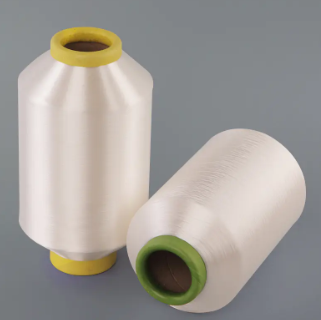
Ideal for low-temperature bonding with a soft feel, high tenacity, and 85 deg C melt point. Available in 20D to 300D.
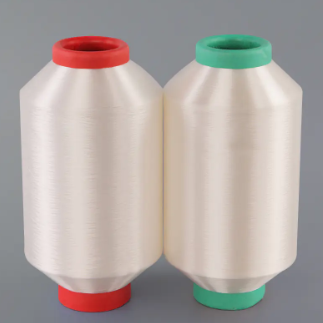
Suited for moderate heat processing in hosiery, sportswear, and apparel hem bonding applications.
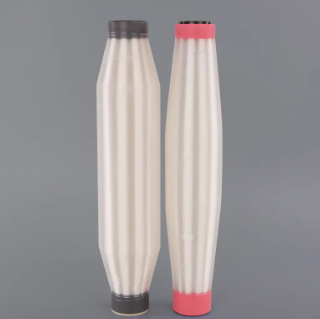
A cost-effective solution for nonwovens, geotextiles, and filtration media requiring uniform adhesion.
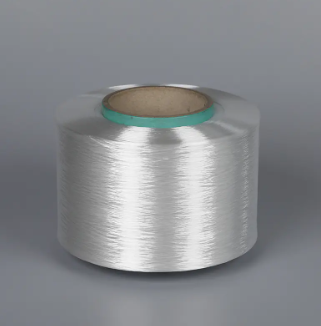
The sheath melts at 110 deg C while the core retains full strength -- perfect for structural fabrics, composites, and reinforcement.
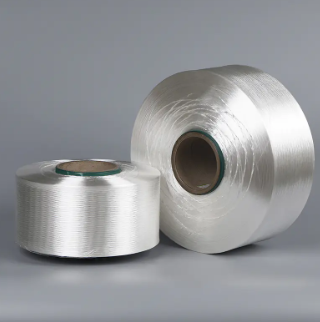
Engineered specifically for footwear manufacturing. Provides excellent shape retention and bonding strength in hot-press shoe upper production.
Low melting yarn is used across a wide range of industries. Below is a quick-reference guide to common applications:
| Industry | Application | Why LMY Is Preferred |
|---|---|---|
| Footwear | Shoe upper stiffening, toe bonding | Precise shape setting, no adhesive mess |
| Apparel | Hem sealing, waistband reinforcement | Washable bond, no visible stitching |
| Nonwovens | Binder fiber in spunbond/meltblown webs | Uniform bonding, improved tensile strength |
| Automotive | Interior headliners, carpet backing | Heat resistance, dimensional stability |
| Filtration | Filter media bonding | Chemical-free, contamination-safe adhesion |
| Medical Textiles | Wound dressings, surgical drapes | Biocompatible options, sterile bonding process |
| Geotextiles | Erosion control fabric | High durability, weather-resistant bonds |
Use this decision checklist to quickly assess suitability:
If you answered yes to three or more of the above, Low Melting Yarn is likely the right choice for your application.
The choice between nylon-based and polyester-based low melting yarn depends on your performance priorities:
| Property | Nylon LMY | Polyester LMY |
|---|---|---|
| Melt Point Range | 85 deg C -- 110 deg C | 110 deg C -- 180 deg C |
| Tensile Strength | High | Moderate to High |
| Moisture Absorption | Higher (more comfortable) | Lower (more stable) |
| Cost | Higher | Lower |
| Chemical Resistance | Moderate | High |
| Typical Use Case | Hosiery, sportswear, delicate fabrics | Nonwovens, industrial, filtration, footwear |
Industry Insight: According to a 2023 report by Grand View Research, the global technical textile market -- which heavily uses thermal bonding fibers including low melting yarn -- was valued at approximately USD 220 billion and is projected to grow at 4.5% CAGR through 2030. Thermal bonding fibers are a key driver in the nonwovens and automotive segments. (Source: Grand View Research, Technical Textiles Market Report, 2023)
Low Melting Yarn is the right choice when your textile or industrial process demands clean, precise, adhesive-free bonding through heat activation. Whether you are manufacturing footwear uppers, nonwoven fabrics, filtration media, or structured apparel, there is a specific LMY type -- nylon or polyester, 85 deg C or 110 deg C, 100% or sheath-core -- engineered to match your temperature window, substrate, and performance requirements. Evaluate your heat-setting process, substrate compatibility, and structural needs to select the best product from our range.

Nó được làm bằng PLA Bio-Base, có thể phân hủy hoàn toàn Tính năng: 1. Sản phẩm phân bón công nghiệp ...
Đọc thêm
Nó được làm bằng polyester, chúng ta có thể sản xuất sợi tốt nhất, 7D và 10D DTY có thể hoạt động trong nhà máy của c...
Đọc thêm
Nó được làm bằng polyester, chúng ta có thể sản xuất sợi micro đặc biệt, DPF có thể ít hơn 0,5 Tính năng: ...
Đọc thêmMột chai PET 500 mL nặng khoảng 9 gram sau khi mở nắp và nhãn. Một chiếc áo dệt kim có trọng lượng trung bình có thể chứa từ 250 đến 400 gram sợi, nghĩa l...
Đọc thêmKhi bạn chọn sợi cho một sản phẩm chịu được nước muối, ma sát nặng hoặc độ ẩm nhiều tháng, polyester và nylon thường được đưa ra đầu tiên trong cuộc thảo ...
Đọc thêmIf you are comparing fabrics for sportswear or sustainable everyday clothing, you have probably asked yourself: is recycled polyester breathable? The shor...
Đọc thêmVui lòng điền vào mẫu dưới đây và nhóm của chúng tôi sẽ liên hệ với bạn càng sớm càng tốt.
Addres: Số 66 Đường Qiaogang, Haian, Thành phố Nantong, tỉnh Giang Tô, Trung Quốc
E-mail: admin@gcfiber.com
Copyright © Sợi GC All Rights Reserved.
